
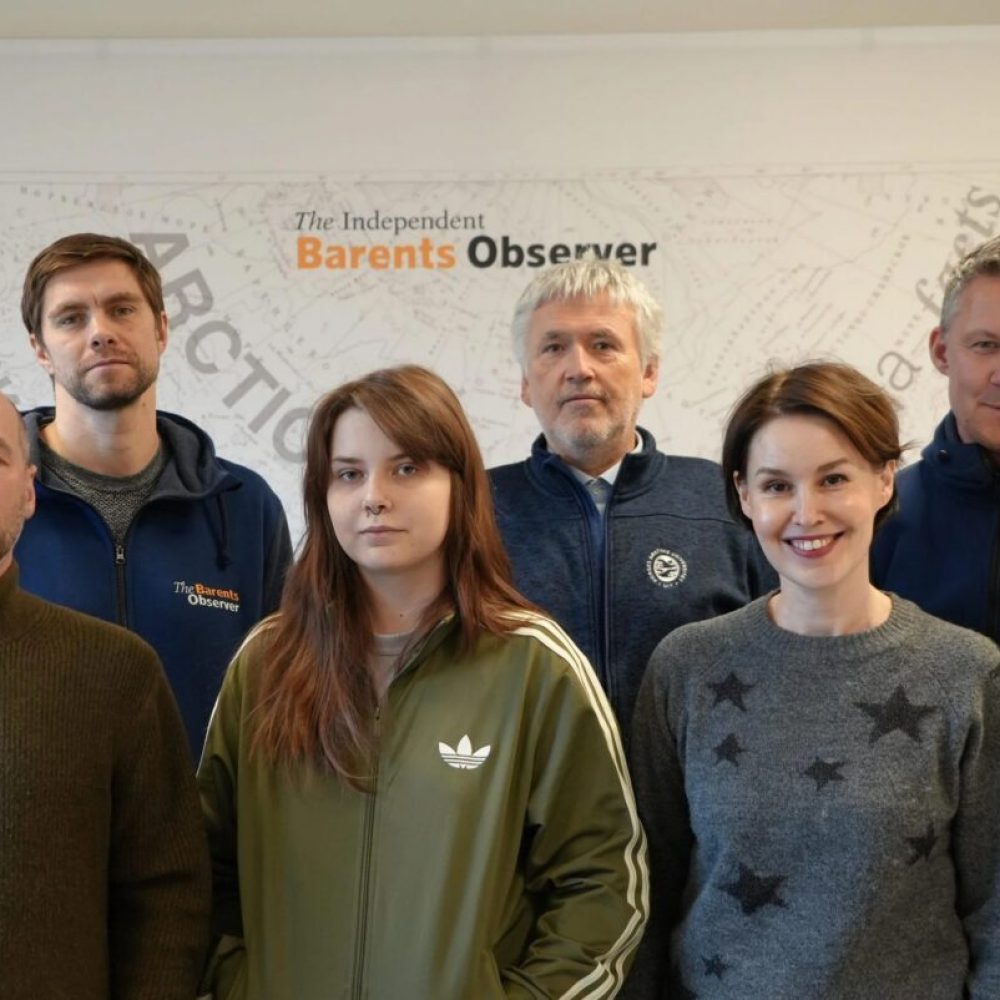
The Barents Observer is a journalist-owned online newspaper based in Norway covering the Euro-Arctic region and northern Russia. Between May 2025 and January 2026, the newspaper published five articles on Russian billionaire Vitaly Orlov and his company Norebo, which is one of the largest seafood companies in Russia. All five articles centred around the sanctions imposed by the EU and Norway on Norebo in 2025.
Norebo was put on sanctions lists due to concerns that it was engaging in espionage. According to the EU, the vessels owned and operated by Norebo had shown movement patterns that align with malign objectives, such as “repeatedly being in the vicinity of or loitering near critical infrastructure and military sites.” Norebo has applied to have the EU sanctions annulled and has brought legal action against Norway for its sanctions. The company has not been sanctioned in the UK.
In January 2026, the Barents Observer received the first legal letter from the London-based law firm Devonshires Solicitors on instruction from Orlov. They claim that reporting from the Barents Observer was the basis for the imposition of EU sanctions and therefore their coverage had “serious and significant” commercial consequences for Norebo. Other Norwegian outlets had also covered Norebo’s inclusion in the international sanctions lists but the Barents Observer is the only one currently subject to legal action.
In September 2026, a representative from Devonshires Solicitors travelled to Kirkenes in northern Norway to hand deliver court papers to the Barents Observer office. The court papers were accompanied by a cover letter in English and Norwegian confirming that defamation proceedings had been filed to the court in London. Orlov claims that the media outlet’s coverage was “defamatory at the very highest level” and is requesting damages, including aggravated damages from the Barents Observer.
In response, the Barents Observer wrote a letter to the High Court in October 2026, pointing out that London was not the appropriate jurisdiction for the legal action. They said that they publish in English and in Russian, and that readers in the UK account for a small percentage of page views to their English-language edition. The High Court has yet to determine whether the case can proceed in the UK.
Jessica Ní Mhainín, co-chair of the UK Anti-SLAPP Coalition, said:
“Why is a Russian billionaire pursuing legal action against a small, journalist-owned outlet in a jurisdiction that is thousands of kilometres away and completely unfamiliar to them? The fact that this outlet alone has been targeted, despite other media reporting on the same issues, raises serious questions about the purpose of the legal action. This case has multiple hallmarks of a SLAPP and once again underscores why we need safeguards, including effective legislation and regulation, to protect public watchdogs from abusive litigation designed to silence scrutiny.”
Jasmijn de Zeeuw of the Coalition against SLAPPs in Europe (CASE), said:
“This case is a clear example of the threat cross-border SLAPPs pose to public watchdogs, including independent media outlets such as The Barents Observer. The fisheries industry recurrently appears in the CASE database as a beat that attracts (cross-border) SLAPP action, underlining the importance of public watchdogs who withstand legal intimidation and continue to report on its operations.”
This is not the first time the Barents Observer has been threatened by Russian entities. In 2014, the FSB called on Norwegian officials to shut down the Barents Observer. In 2017, the outlet’s editor Thomas Nilsen was declared a threat to Russia’s national security. In 2019, the censorship agency Roskomnadzor blocked the Barents Observer in Russia. In 2025, Russia declared the Barents Observer an “undesirable organisation”. The decision was published the day after the Barents Observer won a case at the European Court of Human Rights, holding that the 2019 blocking of their website in Russia was unlawful.
A media freedom alert has also been filed to the Council of Europe Platform for the Protection of Journalism and Safety of Journalists about the case.
In response to a request for comment, Devonshires rejected the suggestion that Orlov’s defamation claim is a strategic lawsuit against public participation (SLAPP), arguing that it is a legitimate attempt to seek redress over five articles containing false and damaging allegations of espionage and sabotage about their client. They say the reporting has caused serious reputational and commercial damage, and that the court proceedings are intended to establish liability and secure swift redress, not silence legitimate journalism.
They maintain that the Barents Observer failed to respond to pre-action correspondence. They also dispute the suggestion that the claim was improperly brought in England and Wales, pointing out the Barents Observer publishes in English and has a “significant” UK readership. Devonshires Solicitors also stated that it had acted properly and in compliance with SRA guidance in its conduct of the claim.