
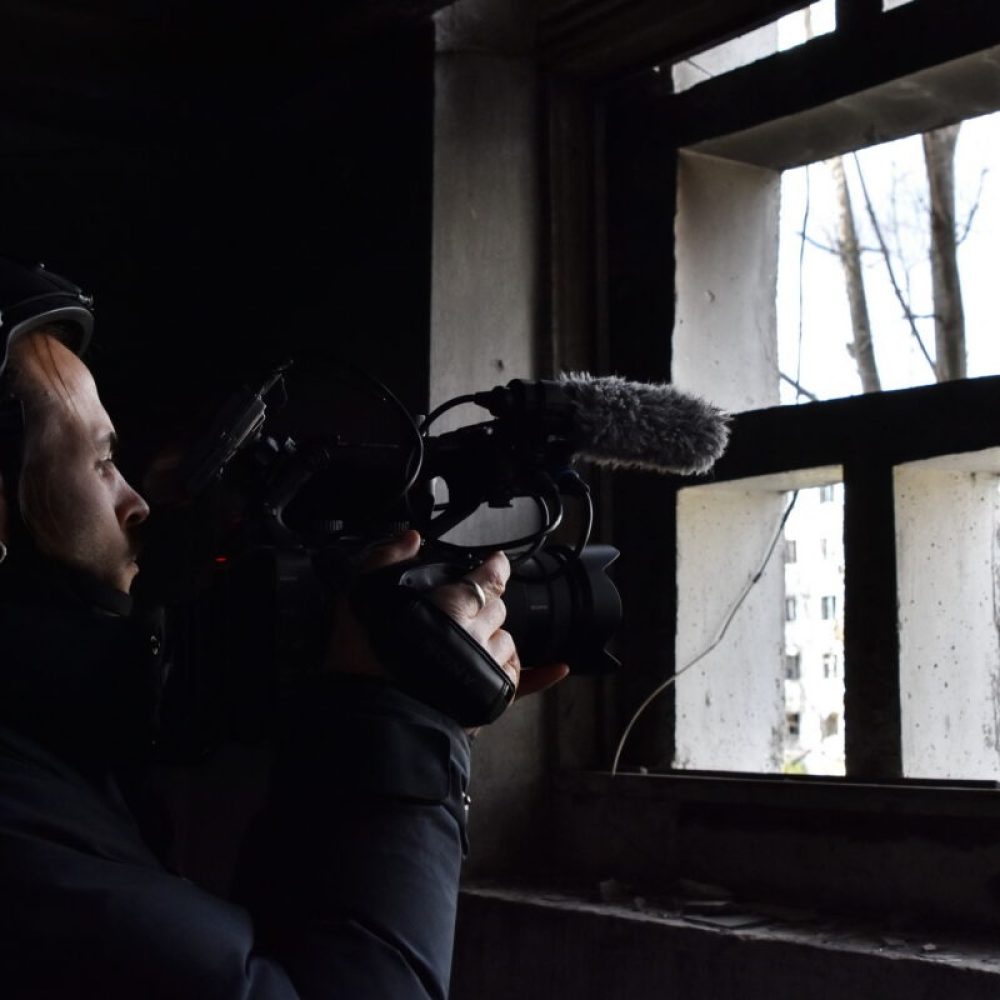
The National Union of Journalists of Ukraine (NUJU) has published the findings of its safety monitoring for the first half of 2026, documenting 80 verified cases in which Russian aggression directly affected Ukraine’s media sector. The monitoring’s key finding is that the widespread use of drones in warfare has fundamentally transformed the nature of the security threats faced by journalists in Ukraine.
NUJU also documented the human toll of the war on Ukraine’s media community. During the first half of 2026, ten journalists and media professionals serving in Ukraine’s Armed Forces were killed. The reporting period also brought confirmation of the deaths of two additional media workers in previous years. Meanwhile, at least 28 Ukrainian journalists remain unlawfully detained by the Russian Federation.
Methodology
The NUJU monitoring covers only verified cases of the physical impact of Russian aggression on civilian journalists, editorial offices and media organisations. These include injuries to journalists, damage to newsrooms, journalists’ homes and property, as well as other consequences of Russian missile and drone attacks. Online threats, information attacks and other non-physical forms of pressure are not included in this monitoring.
The monitoring is conducted by the National Union of Journalists of Ukraine and is based on the verification of information from open sources, direct reports from journalists and editorial teams, the Union’s own monitoring through its network of Journalists’ Solidarity Centres, and information received from state authorities.
The unit of measurement in this monitoring is not an individual Russian attack but each verified instance of its physical impact on a journalist, editorial office or media infrastructure facility. Consequently, a single Russian missile or drone strike may result in several separate recorded cases if it affects multiple newsrooms, journalists or media facilities.
During the first half of the year, NUJU documented 80 verified cases of physical harm resulting from Russian aggression, including:
- 35 cases of damage to journalists’ homes and property;
- 28 cases of damage to or destruction of editorial offices and media infrastructure facilities, including two editorial offices that were completely destroyed;
- 14 cases in which journalists came under Russian attack while carrying out their professional duties;
- 3 cases of injuries to civilian journalists.
The monthly figures demonstrate a growing intensity of attacks: January – 2 cases, February – 10, March – 18, April – 8, May – 22, and June – 17.
The highest monthly figure was recorded in May, primarily as a result of the large-scale combined missile and drone attack on Kyiv during the night of 24 May. Editorial offices of both Ukrainian and international media organisations were affected, including UNIAN, Graty, Realna Hazeta, the studios of ARD and Deutsche Welle, as well as the office of the Kyiv Regional Organisation of the NUJU.
Drones have fundamentally changed the rules of journalists’ safety
The primary conclusion of the monitoring is that the large-scale use of attack drones has profoundly altered the nature of safety risks faced by journalists in Ukraine.
FPV drones, fibre-optic-controlled drones, and other advanced unmanned aerial systems have significantly expanded the threat landscape for journalists. Whereas the greatest dangers were once concentrated near the front line, primarily from artillery and missile strikes, journalists now face elevated risks tens of kilometres away from active combat zones.
Particular concern stems from the emergence of fibre-optic FPV drones, which remain virtually undetectable by existing drone-detection systems. At the same time, the traditional PRESS marking, which under international humanitarian law is intended to provide an additional layer of protection for civilian journalists, is increasingly failing to serve its purpose. During the first half of the year, the National Union of Journalists of Ukraine documented at least four cases in which journalists wearing clearly marked PRESS protective gear were deliberately targeted by Russian drone operators.
“The first half of 2026 demonstrated that the safety protocols which had guided journalists working in conflict zones for years are no longer sufficient. Drones have fundamentally transformed the nature of warfare, making journalistic work even more dangerous. We document every case not only to support affected colleagues today, but also to create an evidential record for future international justice. Every damaged newsroom, every injured journalist, and every unlawfully imprisoned media worker represents a distinct piece of evidence of Russia’s systematic war against freedom of expression,” said NUJU President Sergiy Tomilenko.
Human losses within the media community
NUJU separately documents the losses sustained by journalists and media professionals who served in Ukraine’s Armed Forces.
During the first half of 2026, Lana Chornohorska, Yurii Mihashko, Volodymyr Syniichuk, Serhii Fisun, Volodymyr Fomichenko-Zakutskyi, Artur Petrov, Yevhen Solovei, Viktoriia Bobrova, Maksym Oseredchuk and Oleksandr Vernihorov were killed.
The first half of the year also brought confirmation of the deaths of two additional members of the media community, Ihor Malakhov and Oleksandr Klymenko, who were killed while serving in the military in 2023-2024.
No civilian journalists were killed during the reporting period. However, three journalists were injured: Ihor Levenok (Inter), Oksana Rudyk (Suspilne Ivano-Frankivsk), and Olha Kalinovska (Channel 5). Kalinovska suffered a concussion after a Russian FPV drone attack, the second such injury she has sustained since the start of Russia’s full-scale invasion.
Overall losses of the media community
According to NUJU, at least 152 members of Ukraine’s media community have been killed as a result of Russian aggression since the start of the full-scale invasion, including:
- 21 journalists and media workers were killed while carrying out their professional duties;
- 10 journalists and media workers who were civilian victims of Russian attacks;
- 121 journalists and media professionals were killed while serving in Ukraine’s Armed Forces.
According to the NUJU monitoring database, at least 28 Ukrainian journalists are being unlawfully held in Russian captivity. None was released during the first half of 2026. Russia continues to systematically use Ukrainian journalists as civilian hostages, in blatant violation of international humanitarian law. Four women journalists are among those imprisoned. A particularly alarming case was the sentencing at the end of April of Oleksandr Malyshev, administrator of the “Melitopol Is Ukraine” chat group, to 26 years in a maximum-security penal colony.
NUJU calls on international organisations, democratic governments, and journalists’ associations worldwide to strengthen support for journalist safety programmes and increase political and legal pressure on the Russian Federation to end attacks on the media, ensure accountability for crimes committed against journalists, and secure the release of Ukrainian media professionals who remain in Russian captivity.