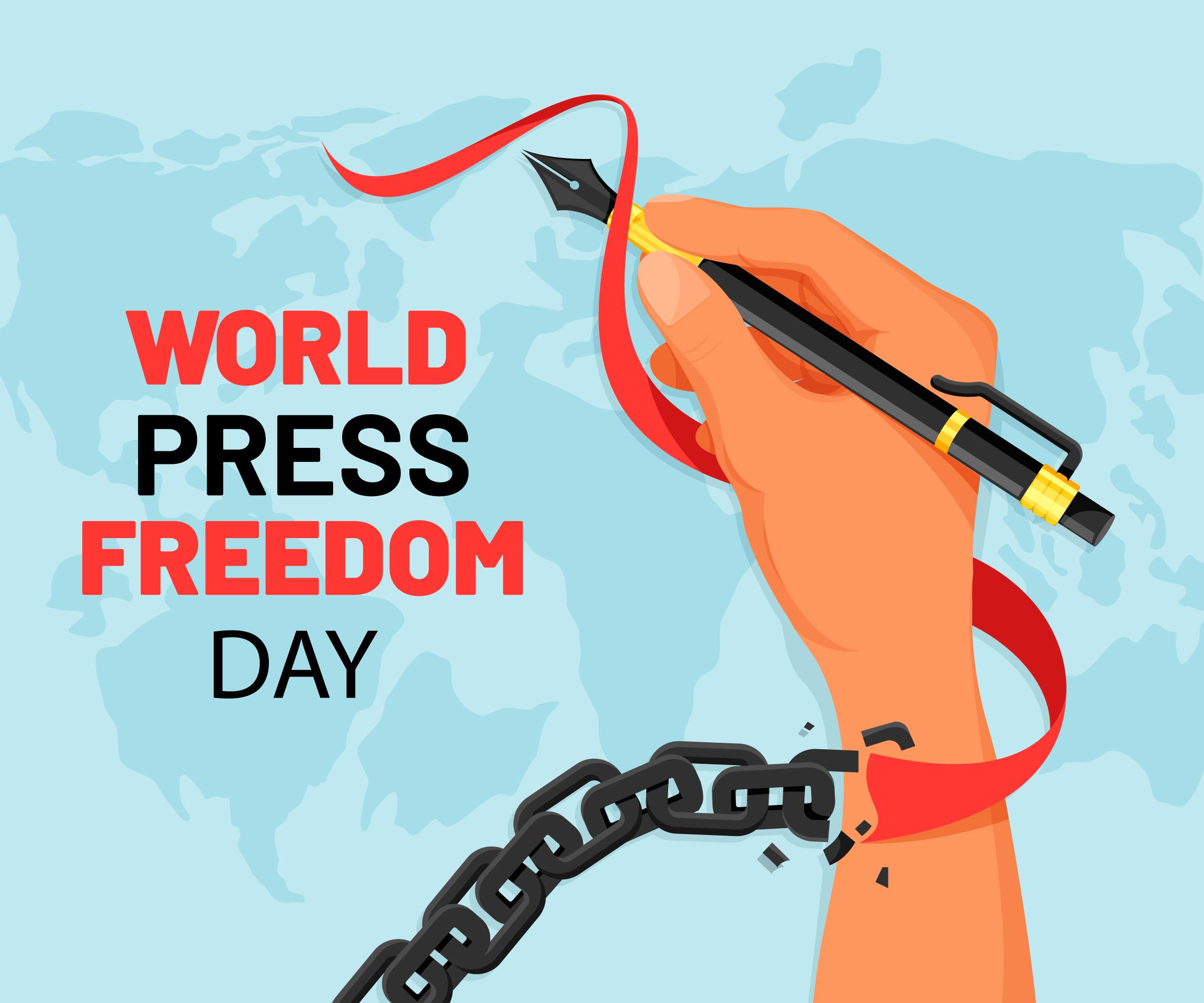
On World Press Freedom Day, May 3, JFJ stood in solidarity with media workers facing escalating attacks from authoritarian governments and powerful private interests. From surveillance, intimidation and legal harassment to physical violence and disinformation, the pressure on independent media continues to intensify.
The war on truth is accelerating. Together with our partners, we will continue to expose and name those accountable for attacks on media workers, shine a spotlight on the methods used to silence independent voices, and advocate for stronger policy measures to protect media workers and counter abuse of media workers. Journalism is not merely a profession, it is a pillar of democracy.
TRANSNATIONAL REPRESSION
- Freedom House released the report Collaboration and Resistance: Tracking Transnational Repression in 2025. The report recorded 126 new incidents of physical, direct transnational repression during the year, bringing the total number of cases in their database, which spans 2014 to 2025, to 1,375. Six governments – those in Afghanistan, Benin, Georgia, Kenya, Tanzania, and Zimbabwe – were identified for the first time as having used tactics of transnational repression.
- IPHR and the State Capture Accountability Project released a new guide for policymakers responsible for creating, implementing and overseeing host government policy to prevent and respond to transnational repression.
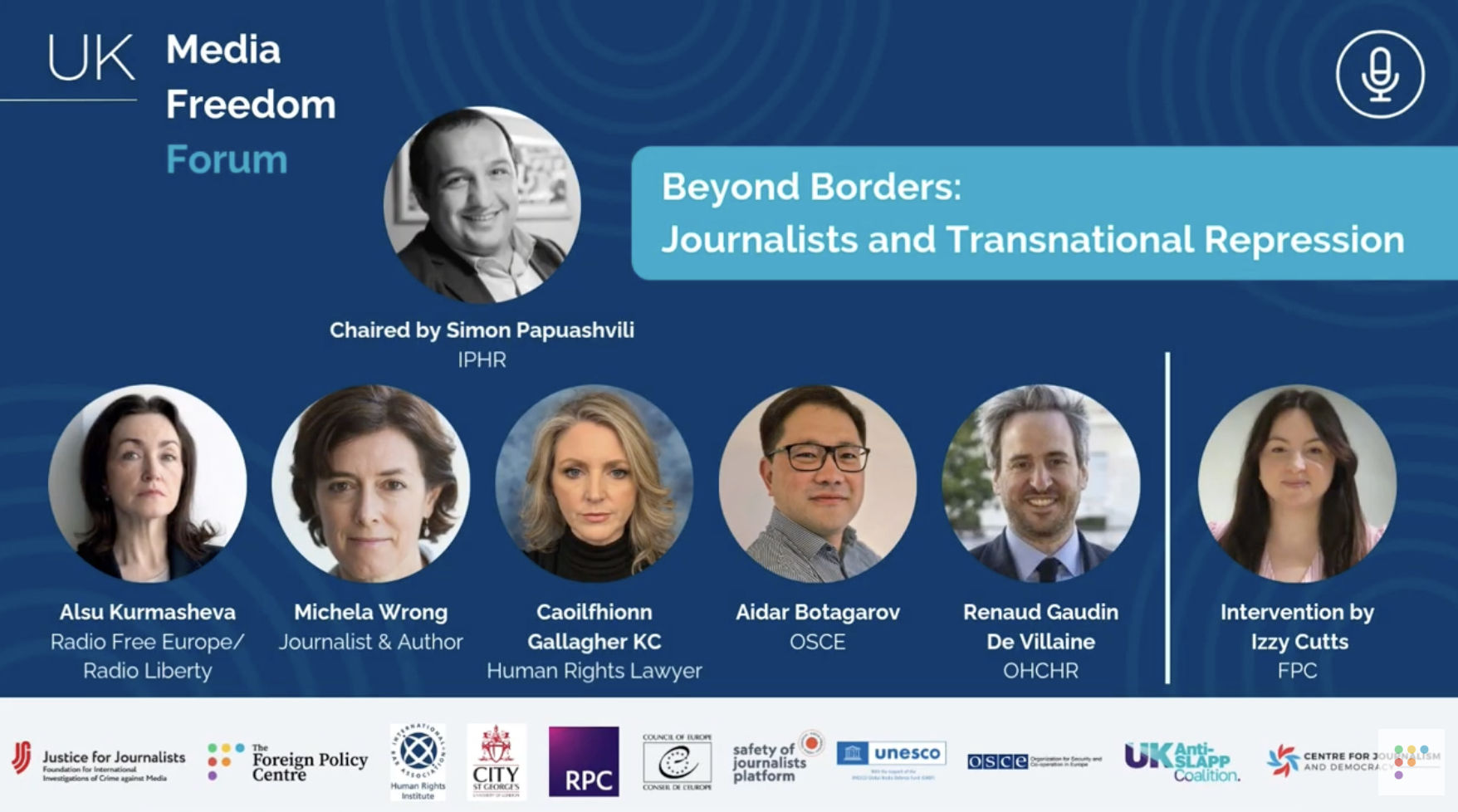
- The issue was also discussed at the third UK Media Freedom Forum, organised by JFJ together with FPC and the International Bar Association’s Human Rights Institute, in partnership with City St George’s, University of London, on 5–6 March. The session brought together journalists, policymakers and civil society to examine how repressive actors extend their reach, erode press freedom internationally, and leverage both traditional and emerging tools to silence dissent. A recording of the panel discussion on transnational repression is available here.
- On 12 May, the Committee to Protect Journalists (CPJ) was added to the Ministry of Justice’s register of ‘undesirable organisations’. CPJ, which has no presence in the Russian Federation and was not notified of the decision or its reasons, has called on the Russian authorities to reverse the ban.
ANTI-SLAPP EFFORT

- The UK Anti-SLAPP Coalition is deeply disappointed by the lack of any legislative commitment to address SLAPPs in the King’s Speech. This omission effectively means efforts to tackle this issue remain stalled, despite previous commitments by Government officials to the contrary, and crucially leaves too many people vulnerable to being silenced for speaking out in the public interest. However, considering there is strong cross-party and cross-chamber support the UK Anti-SLAPP Coalition hope other MPs or peers will take the step the Government has not and move to stamp out SLAPPs and protect democracy.
- A new investigation by Democracy for Sale revealed how elite London law firms representing oligarchs and ultra-wealthy clients quietly lobbied Labour to weaken long-promised anti-SLAPP reforms.
NEWS FROM THE PARTNERS
- Since February 2022, the National Union of Journalists of Ukraine has built a network of Journalists’ Solidarity Centers across the country, providing Ukrainian and foreign journalists working in Ukraine with protective gear, technical assistance, funding, legal and psychological support. The centers have become a lifeline for independent reporting during wartime, helping thousands of journalists continue documenting the realities of the war despite growing danger and financial strain. Learn more information here.
- The IREX offers a rapid response support mechanism for individuals and organisations facing or anticipating risks related to their work in media, journalism, human rights, and other fields protecting freedom of expression. The support is free, confidential, and typically provided within 24 hours. To learn more contact: contact@risksupport.net.
- OVD-Info is organising a three-day hackathon for developers, engineers, security specialists, and anyone who can turn complex technical challenges into working tools. The hackathon will take place in Berlin from 19 to 21 June 2026. This is an opportunity to apply your skills to build real tools that will immediately be used in the work of OVD-Info and other human rights organisations.
- The Council of Europe is holding its 2026 Democracy Hackathon in Strasbourg from 17-19 June. As part of the New Democratic Pact for Europe, this event is aimed at teams of 3-4 people with different profiles who will spend three days developing practical, rights-based solutions to a shared challenge. A grant of 50,000€ will be distributed among the winning teams. Register by 5 June.
- The Helsinki Foundation for Human Rights has opened applications for the second edition of the Human Rights Lab School, an educational programme for NGO staff and interns, representatives of civic initiatives, and activists from Central Asia and the South Caucasus who are already working in the field of human rights or would like to develop in this area. The first stage of the programme will begin in October 2026 and will run for one year in a hybrid format, combining online modules with in-person meetings in Warsaw and one of the countries of Central Asia. Participants will receive training in human rights protection mechanisms, monitoring, advocacy, and other practical tools used in human rights work. Applications can be submitted until 10 June here.
- JX Fund invites independent exiled media from Afghanistan, Azerbaijan, Belarus, Myanmar, Nicaragua, Russia, and Syria to apply for financial support and expert consultations to develop innovative and sustainable revenue strategies. The deadline is 14 June.
- The CORRECTIV.Exile Journalist-in-Residence Program supports journalists who have been forced into exile due to persecution connected to their work. It provides what many lose in exile: a professional newsroom, trusted colleagues, technical infrastructure, and public visibility within a safe environment. The deadline is 31 May.